Yes, I always know that "Magenta" is a problematic tango label. It offers wrong song descriptions, saying their music is from famous orquestra XXX but is actually not. Yes, I know it! But I always believe there may be exceptions...like Magenta's collection on Canaro. But as a music collector + a tanturi lover - I really couldn't stop myself to buy the final two Tanturi commencial cds that I still did't have...Then eventually I received these two dXXm cds saying Tanturi on the cover but I can't find a single trace of Tanturi's style of any period in any of these music. (though the singer does sound like Enrique Campos...)
So, please, with my wasted money and frustration........"Blacklist Magenta"!
Monday, March 19, 2007


Friday, March 09, 2007
Argentine Tango 真正意義之隨想 (一) by Coleman
這次是我第二次在網誌上與其他人分享我對 Argentine Tango 之感想。上一次已是2006 年12月30日的事。
但這次卻是我第一次用中文,我不懂中文輸入法,工作了十多年都是用英文,即使是MSN 及 email 都一向以英文溝通。但是,即使是甚為崇洋的我,到了2007年的今天,都要承認用中文更user-friendly,接觸面更廣,同時亦由於工作上越來越須要多用中文,因此最近買了手寫板回來,順便利用寫blog來當練習。
我的中文水準自20 年前的中學畢業後便一直退步至今,因此請大家指教指教!!!
最近義務幫香港Tangotang 主持了一次Tuesday Guided Practica 及 Intensive Leaders Workshop,在準備工作時,想到究竟在我的tango知識及體會裡,有那些是我最希望能與新加入argentine tango之舞者分享,及即時能帶來一些改變呢?與他們分享一些新奇有趣的招式? 還是一些技術上之解構?這些似乎其他本地及外來之老師們都做得很足夠,甚致開始有些吃不消似的……..
想啊想……想對了!
一個好像很簡單的哲學 –“ Tango 是一種舞蹈!”
但越簡單的道理似乎越容易被忽略。被忽略的原因可能是大家在學習的道路上都只被一些新奇有趣、古靈精怪、令人目瞪口呆的招式吸引著,被一個個發音非常酷的西班牙語舞步名稱如 Colgadas, barridas, Volcadas, boleo, secada, parada, planeo, abrazo, gancho, nuveo, milonguero…etc 弄過頭昏眼花。
回想自己,一跳argentine tango便4年,那是2003年2月的一個晚上,一位朋友想學tango,想找多一個人陪她,便帶我到 Helena May的 Tangotang參觀。當時做了近30年人都從來不喜歡跳舞的我,甚致討厭去disco,但我卻被當晚所看見及聽見的深深打動著。那時的師兄師姐,舞步簡單而優美,沒有什麼踢上天的腿、沒有360度10次大回環 giro, 沒有八爪魚腳…..有的都是良好的embrace、充滿音樂感的身體擺動,舞者面上流露出正在享受親密而溫暖的擁抱(abrazo)及細嚐浪蔓感人的音樂的表情。一個月後,SARS襲港,一直到5月底,香港跳tango的人少了近一半,我卻在這時正式加入argentine tango之journey。自始之過去4年內,我幾乎沒有一個星期是沒有tango 的,而且….似乎跳得越來越密,真的有些不好意思 :P
這4年內,幾乎都是不斷重覆著 「上課 – 去milonga – 去practica – 上課 – 看表演」及最近多了「看youtube」。當中看live performance 及 youtube給了我很好的機會去用第三者的angle欣賞來自世界各地tango大師的舞風。在欣賞之同時,我亦能靜下來用理智assess一下自己對argentine tango的理解,從而找對方向。對的,我是喜歡思巧求真的那類人,相信凡事總有「理性」及「感性」兩面、工作如是、待人處世如是、家庭如是、要tango跳得好亦如是,必須「感、理」兼顧。「感性」是指我們對學習tango之熱誠、在享受跳tango時之忘我、及對超越自己的追求。沒有了這種「感性」一面,我們會失去向前進步的推動力。但與此同時,我們亦耍對學習階段中遇到的每一樣事以羅緝分柝,定期檢討方向,把自己從舞池中抽出來,觀察別人、大師的舞風、多跟訪港的老師聊天、多閱讀網上有關tango之literature,從而獲得更全面資訊,用「理性」去更了解tango文化之意義。
在看過了無數個不同大師表演後的一天,下了一個簡單結論 : 「tango是一種兩個人一起跳的couple dance,leader的舞步必須與音樂緊密結合,才能令follower產生投入感及享受tango獨有之connection。優秀的leader要讓follower跳得「舒服」及「漂亮」。弦耀自己技巧的同時,必須同時照顧partner之感覺!」
信不信由你,這正是nuevo tango之精神所在。真正Nuevo tango不是指跳得那些新奇有趣及funky誇張的舞步,這些只是nuevo tango發展歷史上出現的by-product,但卻常常被初學者曲解為nuevo tango之真締。Nuevo tango並不是一種突然誕生的發明,而是由一群資深舞者(當中有的本身是當律師的,呵呵!)在跳了多年tango後的一種體會,他們走在一起,研究tango之起源及自19世紀初以來的發展,分柝各舞步動作中出現的mechanical structure,然後有系統的歸納出一套工具,及其運用的方法和condition等。Nuevo tango之起源其實似一套經羅緝分折而成的研究報告,但重點是這份「研究報告」的結論卻開拓了argentine tango在後來日子發展之無限可能性,影響深遠,有好的、亦有不好的……
(待續)
但這次卻是我第一次用中文,我不懂中文輸入法,工作了十多年都是用英文,即使是MSN 及 email 都一向以英文溝通。但是,即使是甚為崇洋的我,到了2007年的今天,都要承認用中文更user-friendly,接觸面更廣,同時亦由於工作上越來越須要多用中文,因此最近買了手寫板回來,順便利用寫blog來當練習。
我的中文水準自20 年前的中學畢業後便一直退步至今,因此請大家指教指教!!!
最近義務幫香港Tangotang 主持了一次Tuesday Guided Practica 及 Intensive Leaders Workshop,在準備工作時,想到究竟在我的tango知識及體會裡,有那些是我最希望能與新加入argentine tango之舞者分享,及即時能帶來一些改變呢?與他們分享一些新奇有趣的招式? 還是一些技術上之解構?這些似乎其他本地及外來之老師們都做得很足夠,甚致開始有些吃不消似的……..
想啊想……想對了!
一個好像很簡單的哲學 –“ Tango 是一種舞蹈!”
但越簡單的道理似乎越容易被忽略。被忽略的原因可能是大家在學習的道路上都只被一些新奇有趣、古靈精怪、令人目瞪口呆的招式吸引著,被一個個發音非常酷的西班牙語舞步名稱如 Colgadas, barridas, Volcadas, boleo, secada, parada, planeo, abrazo, gancho, nuveo, milonguero…etc 弄過頭昏眼花。
回想自己,一跳argentine tango便4年,那是2003年2月的一個晚上,一位朋友想學tango,想找多一個人陪她,便帶我到 Helena May的 Tangotang參觀。當時做了近30年人都從來不喜歡跳舞的我,甚致討厭去disco,但我卻被當晚所看見及聽見的深深打動著。那時的師兄師姐,舞步簡單而優美,沒有什麼踢上天的腿、沒有360度10次大回環 giro, 沒有八爪魚腳…..有的都是良好的embrace、充滿音樂感的身體擺動,舞者面上流露出正在享受親密而溫暖的擁抱(abrazo)及細嚐浪蔓感人的音樂的表情。一個月後,SARS襲港,一直到5月底,香港跳tango的人少了近一半,我卻在這時正式加入argentine tango之journey。自始之過去4年內,我幾乎沒有一個星期是沒有tango 的,而且….似乎跳得越來越密,真的有些不好意思 :P
這4年內,幾乎都是不斷重覆著 「上課 – 去milonga – 去practica – 上課 – 看表演」及最近多了「看youtube」。當中看live performance 及 youtube給了我很好的機會去用第三者的angle欣賞來自世界各地tango大師的舞風。在欣賞之同時,我亦能靜下來用理智assess一下自己對argentine tango的理解,從而找對方向。對的,我是喜歡思巧求真的那類人,相信凡事總有「理性」及「感性」兩面、工作如是、待人處世如是、家庭如是、要tango跳得好亦如是,必須「感、理」兼顧。「感性」是指我們對學習tango之熱誠、在享受跳tango時之忘我、及對超越自己的追求。沒有了這種「感性」一面,我們會失去向前進步的推動力。但與此同時,我們亦耍對學習階段中遇到的每一樣事以羅緝分柝,定期檢討方向,把自己從舞池中抽出來,觀察別人、大師的舞風、多跟訪港的老師聊天、多閱讀網上有關tango之literature,從而獲得更全面資訊,用「理性」去更了解tango文化之意義。
在看過了無數個不同大師表演後的一天,下了一個簡單結論 : 「tango是一種兩個人一起跳的couple dance,leader的舞步必須與音樂緊密結合,才能令follower產生投入感及享受tango獨有之connection。優秀的leader要讓follower跳得「舒服」及「漂亮」。弦耀自己技巧的同時,必須同時照顧partner之感覺!」
信不信由你,這正是nuevo tango之精神所在。真正Nuevo tango不是指跳得那些新奇有趣及funky誇張的舞步,這些只是nuevo tango發展歷史上出現的by-product,但卻常常被初學者曲解為nuevo tango之真締。Nuevo tango並不是一種突然誕生的發明,而是由一群資深舞者(當中有的本身是當律師的,呵呵!)在跳了多年tango後的一種體會,他們走在一起,研究tango之起源及自19世紀初以來的發展,分柝各舞步動作中出現的mechanical structure,然後有系統的歸納出一套工具,及其運用的方法和condition等。Nuevo tango之起源其實似一套經羅緝分折而成的研究報告,但重點是這份「研究報告」的結論卻開拓了argentine tango在後來日子發展之無限可能性,影響深遠,有好的、亦有不好的……
(待續)
Thursday, February 15, 2007
A Beginner's Guide to D'Arienzo By Emily
Juan D’Arienzo is one of the most important names in tango history. His music is highly danceable, and it’s hard to imagine a milonga where it won’t be heard. Since he made around 1,000 recordings in his 50-year career, it is not easy to find a small selection of CDs to represent his music. The four disks selected here, however, all have my seal of approval.
The best jumping off point is D’Arienzo’s music from the late 1930s to early 1940s. His music of this period carries a very distinctive rhythm – its mission: to lure dancers to the floor. The piano has a very important role, particularly when played by Rodolfo Biagi, another famous tango musician, who was D’Arienzo’s pianist until he went off to form his own orchestra in 1938.
“Sus Primeros Exitos Vol.1” in the Tango Argentino Series collects almost all of D’Arienzo’s most classic instrumental works from 1935 to 1939. I remember hearing this CD played repeatedly by a group of street tango performers in a flea market in Buenos Aires for nine hours every Sunday. All the tracks are “super-classics”, but especially strong are “9 De Julio”, “La Cumparsita”, “La Viruta” and the famous milonga “Milonga, Vieja Milonga”. If you only want to own one or two D’Arienzo CDs, this should be one of them.
The best jumping off point is D’Arienzo’s music from the late 1930s to early 1940s. His music of this period carries a very distinctive rhythm – its mission: to lure dancers to the floor. The piano has a very important role, particularly when played by Rodolfo Biagi, another famous tango musician, who was D’Arienzo’s pianist until he went off to form his own orchestra in 1938.
“Sus Primeros Exitos Vol.1” in the Tango Argentino Series collects almost all of D’Arienzo’s most classic instrumental works from 1935 to 1939. I remember hearing this CD played repeatedly by a group of street tango performers in a flea market in Buenos Aires for nine hours every Sunday. All the tracks are “super-classics”, but especially strong are “9 De Julio”, “La Cumparsita”, “La Viruta” and the famous milonga “Milonga, Vieja Milonga”. If you only want to own one or two D’Arienzo CDs, this should be one of them.
 If you prefer music with singing, try “Sus Primeros Exitos” or “Tango Bravo”, also in the Tango Argentino series. Vocals tend not to play the key role in D’Arienzo’s music (very different from Di Sarli’s lyrical pieces, where the vocals almost always carry the whole melody, dominating the flow of the song). The melody of D’Arienzo’s music typically comes from an interplay of voice, piano and violin, making the singer as just one of a trio of elements embellishing the rhythm.
 D’Arienzo worked with several tango singers. Héctor Mauré is certainly one of the most important. Although D’Arienzo and Mauré worked together for less than four years, they together created several of tango’s most classic songs. “Sus Primeros Exitos” features such greats as “Amarras”, “Dime Mi Amor”, “Infamia”, “Uno” and “Tango Brujo”.

“Tango Bravo” collects the classic songs of D’Arienzo with Alberto Echagüe and Armando Laborde – possibly the orchestra leader’s two favourite singers. Both Echagüe and Laborde recorded more than a hundred pieces with D’Arienzo. Since the album collects recordings made from 1938 to 1954, it offers a taste of D’Arienzo’s pieces from a period when his music became more dramatic than in his earlier days. Again, most pieces are extremely popular, but with the standouts (in my view) being “Trago Amargo”, “Corrientes Y Esmeralda”, “Mandria”, “Olvídame” and a vals called “En Tu Corazón”.

For milonga lovers, I recommend “Milongueando Con Juan D'Arienzo 1935/1962” released by Euro Records. Since D’Arienzo music’s style is very rhythmical, his interpretation of milongas tends to up-tempo compared with most other tango orchestras. This album has an excellent selection of 21 pieces recorded between 1935 to 1962. Particularly worth listening to are “La Cicatriz”, “Meta Fierro”, “Milonga Del Recuerdo” and “Silueta Porteña”. This CD is also the perfect option for anyone who simply wants a collection of milongas.

If you are a serious collector or a DJ, then consider the “El Rey Del Compas/70 Años” collection released by Sony BMG. This series, consisting altogether of 15 CDs, collects about 300 of D’Arienzo’s recordings, in chronological order, from 1935 to 1975. You will find many beautiful pieces not released on any of the Tango Argentino or Coleccion 78 RPM series.
Monday, February 05, 2007
Exploring Fresedo by Emily
Osvaldo Fresedo may not be as famous as other orchestra leaders such as Carlos Di Sarli, but Di Sarli might well have remained unknown if Fresedo had never existed. Di Sarli’s music, especially his early pieces from the late 1920s, were very much modelled on the style of Fresedo, who first formed his own orchestra in 1918.
Fresedo’s music, especially in the 1930s and early 1940s, is characterised by soft rhythms supporting elegant melodies to evoke a totally romantic atmosphere. Many DJs, myself included, like to play his music towards the end of a milonga when dancers, possibly a little weary after dancing for a good few hours, are looking for something a little softer and less demanding.
Fresedo’s most representative pieces come from between 1933 and 1941, with many of them featuring the singing of either Roberto Ray or Ricardo Ruiz.
Ray started working with Fresedo in 1933. Ray’s way of singing – soft and delicate, almost feminine – became a benchmark Fresedo’s later lyrical tunes. “Tangos De Salon” in the Reliquias series collects the most popular pieces of Fresedo with Ray, among them such classics as “Vida Mia”, “Yo No Se Llorar”, “Canto De Amor” and “El Mareo” One rarity is “Isla De Capri”, a tangoable foxtrot rarely featured on other albums that is also noteworthy for featuring a harp to ornament the melody.
Fresedo’s music, especially in the 1930s and early 1940s, is characterised by soft rhythms supporting elegant melodies to evoke a totally romantic atmosphere. Many DJs, myself included, like to play his music towards the end of a milonga when dancers, possibly a little weary after dancing for a good few hours, are looking for something a little softer and less demanding.
Fresedo’s most representative pieces come from between 1933 and 1941, with many of them featuring the singing of either Roberto Ray or Ricardo Ruiz.
Ray started working with Fresedo in 1933. Ray’s way of singing – soft and delicate, almost feminine – became a benchmark Fresedo’s later lyrical tunes. “Tangos De Salon” in the Reliquias series collects the most popular pieces of Fresedo with Ray, among them such classics as “Vida Mia”, “Yo No Se Llorar”, “Canto De Amor” and “El Mareo” One rarity is “Isla De Capri”, a tangoable foxtrot rarely featured on other albums that is also noteworthy for featuring a harp to ornament the melody.
 Osvaldo Fresedo con Cantores” in the Solo Tango series has many of the same tunes as “Tangos De Salon”, but it also features some songs with Ruiz. Ruiz, who had a similar tenor range as Ray, was chosen by Fresedo to replace Ray after the latter left Fresedo in 1939. Ruiz’s voice is even softer and more feminine than Ray’s – quite easily mistakable for a woman’s. The highlights of this CDs include “Mas Alla”, “Niebla Del Riachuelo”, “Rosarina Linda” and “Vida Querida”; my favourite is Ruiz singing “Despues Del Carnaval” – a piece also adored by many other Hong Kong milongeros after they watched Javier and Geraldine perform to it in Taiwan.
To hear some of Fresedo’s finest instrumental pieces, try “1933/1948”, released last year as part of the Colección 78 RPM series. This album collects many previously unreleased tunes, many of which are popular with DJs in Buenos Aires who previously only owned poor quality bootleg recordings. Fresdeo’s instrumentals are similar in style to his sung tangos, witness his recordings of “La Clavada” and “Firulete”. Also worth listening out for is the subtle sound of the vibraphone in “Mariposita”.

Since the album collects recordings made from 1933 to 1948, it also offers a taste of Fresedo’s pieces from the late 1940s when he experimented with a more grandiose and dramatic sound than in his earlier days. Adding drums and other percussion, however, is not to everyone’s taste; certainly it makes for less tranquil, more abrupt sounding style of tango. For those looking to try a disk from this period, “Y La Perdí” is recommend.
For those looking to sample Fresedo through a single CD, “Años ’33 Al ’48” in the Buenos Aires Tango Club series features something in just about all of his different styles. The album collects instrumentals and lyrical pieces with a number of different singers. Its stand-out tunes – for me at least – are “Tigre Viejo”, “Cuartito Azul” and “Buscandote”.

Editted by Simon Cartledge © 2006 Hong Kong Tango Lab
Thursday, January 25, 2007
Starting with Di Sarli - by Emily
When beginners start to explore tango music, they often ask “Which kind of music is the best for me to try first?” Of course there is no perfect answer, but almost always I recommend the music of Carlos Di Sarli, an orchestra leader often referred to as “El Señor De Tango”. His highly danceable music, especially his recordings of the mid-1940s to mid-1950s, is very popular in many tango classes. So when people who have just started dancing tango go to milongas and hear pieces such as “Bahía Blanca”, “A La Gran Muñeca” or “El Once”, they usually recall them as the songs played by their tango teachers as they attempted their first steps. The reason this music is a favourite for teaching is because of its slow but strong beat and an elegant melody – an ideal combination to train the ears of all newcomers to tango.
The Carlos Di Sarli title in the “RCA Victor 100 Años” series is an all-round excellent album. This CD collects many of Di Sarli’s classics from the 1950s, among them “Bahia Blanca” (which should be familiar to many people after featured as the soundtrack of a Heineken television advertisement), “A La Gran Muñeca”, “El Choclo”, “Comme Il Faut” and “La Cumparsita” (the song usually played at the end of a milonga). The recordings on this CD have had noise-reduction treatment to remove the hiss and crackle of their original recordings. This gives them a sense of newness. Indeed, listening to them it is easy to wonder if the music was recorded a lot more recently rather than around half a century ago.
 |

Both the RCA Victor 100 Años and the Inolvidables disk comprise mostly instrumental pieces. If you prefer his pieces with singing, then try “Carlos Di Sarli – Sus Primeros Exitos Vol. 1”, “Sus Primeros Exitos Vol. 2” and “Porteño Y Bailarín”, all part of the “Tango Argentino” series issued by RCA.
“Sus Primeros Exitos Vol. 1 ” collects the classics of Di Sarli sung by Roberto Rufino. The combination of Di Sarli and Rufino was one of the great pairings in tango history. Many of their productions are classics, admired as much today as when they were recorded. Among the highlights of this CD are Rufino’s first recording with Di Sarli in 1939, “Corazón”. Vals-lovers are certain to like “Alma Mia” and “Rosamel”. Rufino worked with Di Sarli from 1939-1944, a period when the latter’s beat was faster and more rhythmic than in his lusher, more grandiose works of the 1950s.
“Sus Primeros Exitos Vol. 2” collects lyrical pieces sung by another renowned singer, Alberto Podestá (who, incidentally, is still alive and performing in Buenos Aries). He started as a Di Sarli vocalist before reaching the age of 18. This album includes many classics recorded between 1944 and 1947, among them “Nada”, “La Capilla Blanca”, “Vamos!”, “Junto A Tu Corazón” and “Tu! ... El Cielo Y Tu!”. These songs are as good as guaranteed to pull dancers on to the floor when played at a milonga.

“Porteño Y Bailarín” is a collection of Di Sarli’s music with Jorge Duran as vocalist. Its best-known tracks include “Porteño Y Bailarín”, “Que No Sepan Las Estrellas” and “Tus Labios Me Dirán”. The album also has a few famous instrumental pieces, among them “Marianito”, “El Ingeniero” and “El Pollito”. As the album collects recordings ranging from 1945 to 1958, it has a more varied style than the Rufino and Podestá CDs.
For anyone wondering how best to lay the foundations for a tango CD collection, or simply wanting to have some great music to listen and dance to, any – or all – these five CDs are an excellent place to start.
Editted by Simon Cartledge © 2006 Hong Kong Tango LabFriday, January 12, 2007
Tango MV - Angel D'Agostino con Angel Vargas
An interesting montage of the old and new. The music, "Tres Esquinas" is one of the best in tango history.
Royce's article on Cortina - must read! - by Emily
Royce has just posted an excellent article on cortina, please also read my comments too. = )
http://www.loksze.com/thoughts/2007/01/09/why-do-i-love-cortina/
100 % agree with her, she's like the worm of my stomach!
Emily
http://www.loksze.com/thoughts/2007/01/09/why-do-i-love-cortina/
100 % agree with her, she's like the worm of my stomach!
Emily
Monday, January 08, 2007
Tanda - Why and How to make use of it - by Emily
Tanda is a set of tango music, usually consisted of 3-5 pieces. A serious tango dj usually selects songs of the same orchestra, same period, same pace or even the same quality sound for a tanda. I am not going to discuss how to make a tanda here, as my friend, Royce (my first tango teacher and the one who inspired me to be a tango dj) has written on this. For those who want to know more about this area, I highly recommand her article, "The Making of a Tanda" on her blog - http://www.loksze.com/thoughts/2006/11/
We all know about tanda. Most of you may have heard how I make a tanda in Milonga del Corazon and have danced to it. Then, why do we need songs to be arranged in tandas in a milonga? Do we simply mimic the tradition of the milongas in Buenos Aires? Do we really need it? And why? How can we manipulate the tanda and benefit from it?
Imagine a milonga without the use of tanda - one simply plays the music ramdomly without considering the genre, the orchestra, the year of recording, the pace and the sound quality- probably a modern milonga after a traditional vals, an up-tempo electro tango after a lyrical traditional tango...or of any combinations that can be made. For me, it is like having a meal without considering when differernt dishes should be served, like having a starter after enjoying a dessert. Would your enjoy having a light salad after having a rich chocolate cheese cake? I am sure you cannot enjoy the meal in the same level as in the way that the dishes are served in a better timing, even given that the dishes are nicely cooked. Of course this also very much depends on personal taste, but why don't we request more if we can have a better atmosphere where most people can dance in a more comfortable way? In Milonga del Corazon, we aim at being a serious french chef, carefully arrange a sophisticated 9-courses-meal for all of you, while your stomach can comfortably enjoy all the delicious dishes!
Playing tango music with the use of tanda is a trick to help creating an atmosphere or a kind of mood, which allows one can dance more comfortably. Our psychological status can be affected by the music that we hear. That is the reason why we are adviced to listen to some calm, relax and slow pace music if we suffer from insomnia, and there are many psychologists heal their patients with music. Our mood also varies when we hear differernt kinds of tango music.
Let's take milonga as an example. When you hears a piece of milonga, especially when you like that pieces of music, your mind will natually move with the energetic and up-tempo music. This status of mind will not ceased in just about 3 minute time (most tango /vals/milonga lasts around 2 mins more to 3 mins), especially if you hear some real good milongas like those of Canaro and D'arienzo and you have a good partner who dances milonga very well!. You become excited with the pace of milonga, and may expect to hear/dance to one or two more after the first one. Of course, your body will be exhausted after dancing 3 or 4 milongas. You may want to take a break (this is the time when a cortina should be played), and to dance to some music which is less demanding comparing with the milonga. This happens the same when you hear tango or vals.
In this case, the use of tanda in fact helps creating a smooth and comfortable atmosphere for dancers. Offering too much changes of music, either frequent changes of orchestra, genre, pace, time period or sound quality, will create creating a lot of interventions to the dancers. I am sure your ears do not welcome too much disturbances when you are embracing / holding hands of a lovely partner!
Tanda also helps beginners to dance in a milonga, since most tango songs are new to them, it will be just too much for them if their ears have to adapt to every pieces being played, without any idea of which kind of music will be played next.
The use of tanda helps one enjoys a milonga better also because dancers can choose their partners in a more efficient way. For example, in A's mind, B is a very good dancer dancing to energetic and rhythmic music. When A hears D'arienzo's music, A thinks of B immediately and approaches B for a dance. Imagine in a milonga without tanda, after A danced to one rhythmic pieces of D'arienzo with B , the dj plays a dramatic piece of pugliese! Unfortunately, A is a is not a fan of pugliese and is not good at dancing to emotional and melodic music at all! Both A & B suffers because it is just too impolite to reject each other after dancing only one song together!
If the dj plays music according to the rules of tanda, when you hear a piece of D'arienzo's after the cortina, it is guarenteed that the coming three or four pieces will also be D'arienzo's pieces, (even recorded in more or less the same period of time and of the same sound quality if the dj is a serious one). It is a lot more convenient for you too choose the most appropriate partner to dance to the music that you like.
We all know about tanda. Most of you may have heard how I make a tanda in Milonga del Corazon and have danced to it. Then, why do we need songs to be arranged in tandas in a milonga? Do we simply mimic the tradition of the milongas in Buenos Aires? Do we really need it? And why? How can we manipulate the tanda and benefit from it?
Imagine a milonga without the use of tanda - one simply plays the music ramdomly without considering the genre, the orchestra, the year of recording, the pace and the sound quality- probably a modern milonga after a traditional vals, an up-tempo electro tango after a lyrical traditional tango...or of any combinations that can be made. For me, it is like having a meal without considering when differernt dishes should be served, like having a starter after enjoying a dessert. Would your enjoy having a light salad after having a rich chocolate cheese cake? I am sure you cannot enjoy the meal in the same level as in the way that the dishes are served in a better timing, even given that the dishes are nicely cooked. Of course this also very much depends on personal taste, but why don't we request more if we can have a better atmosphere where most people can dance in a more comfortable way? In Milonga del Corazon, we aim at being a serious french chef, carefully arrange a sophisticated 9-courses-meal for all of you, while your stomach can comfortably enjoy all the delicious dishes!
Playing tango music with the use of tanda is a trick to help creating an atmosphere or a kind of mood, which allows one can dance more comfortably. Our psychological status can be affected by the music that we hear. That is the reason why we are adviced to listen to some calm, relax and slow pace music if we suffer from insomnia, and there are many psychologists heal their patients with music. Our mood also varies when we hear differernt kinds of tango music.
Let's take milonga as an example. When you hears a piece of milonga, especially when you like that pieces of music, your mind will natually move with the energetic and up-tempo music. This status of mind will not ceased in just about 3 minute time (most tango /vals/milonga lasts around 2 mins more to 3 mins), especially if you hear some real good milongas like those of Canaro and D'arienzo and you have a good partner who dances milonga very well!. You become excited with the pace of milonga, and may expect to hear/dance to one or two more after the first one. Of course, your body will be exhausted after dancing 3 or 4 milongas. You may want to take a break (this is the time when a cortina should be played), and to dance to some music which is less demanding comparing with the milonga. This happens the same when you hear tango or vals.
In this case, the use of tanda in fact helps creating a smooth and comfortable atmosphere for dancers. Offering too much changes of music, either frequent changes of orchestra, genre, pace, time period or sound quality, will create creating a lot of interventions to the dancers. I am sure your ears do not welcome too much disturbances when you are embracing / holding hands of a lovely partner!
Tanda also helps beginners to dance in a milonga, since most tango songs are new to them, it will be just too much for them if their ears have to adapt to every pieces being played, without any idea of which kind of music will be played next.
The use of tanda helps one enjoys a milonga better also because dancers can choose their partners in a more efficient way. For example, in A's mind, B is a very good dancer dancing to energetic and rhythmic music. When A hears D'arienzo's music, A thinks of B immediately and approaches B for a dance. Imagine in a milonga without tanda, after A danced to one rhythmic pieces of D'arienzo with B , the dj plays a dramatic piece of pugliese! Unfortunately, A is a is not a fan of pugliese and is not good at dancing to emotional and melodic music at all! Both A & B suffers because it is just too impolite to reject each other after dancing only one song together!
If the dj plays music according to the rules of tanda, when you hear a piece of D'arienzo's after the cortina, it is guarenteed that the coming three or four pieces will also be D'arienzo's pieces, (even recorded in more or less the same period of time and of the same sound quality if the dj is a serious one). It is a lot more convenient for you too choose the most appropriate partner to dance to the music that you like.
Since tanda usually consists of 3-5 songs, you can choose to invite a partner that you don't feel confident with in a better timing. For example, if you are a beginner, you always want to invite an advanced dancer for a dance. Nevertheless, you are very timid because you are always afraid to be rejected. Then you can invite him/her after the first or the second song of the tanda has been played. Very often, many advanced dancers will not reject their less preferred partners if they don't have to dance the whole tanda with them(unless he/she is really picky and snob!) Some of you may feel sad to read this, but I'm sorry to tell you that this is very true in many tango communities! Sometimes, when an advanced dancer is invited by their less preferred partners for a dance when the first song of a tanda is played, they may reply, "how about if we dance after this song?" To avoid hearing this, you can seize the correct timing to invite your desired partner in a milonga where tanda is arranged. I know some leaders will only invite unknown followers when the 2nd and the 3rd song of a tanda is being played, so it is less risky for them if later they find out that don't like to dance with them...(poor followers....) Of course if they like dance with you, I'm sure he will dance with you for more tandas!
I know that some real good followers in Buenos Aires, they will wait for their favourite leaders to invite them when the tanda just begins. They will only accept the invitation from their less favourite partners if no one invites them after the first song is played!
Some of you may say, "I'm a buffet lover and enjoy hearing differernt sorts of music at any time and don't want any rules at all!" Well, my response to this is, a milonga is a dancing space for a lot of people of differernt levels and styles, and I need to concern the needs for all of them! Since tanda is a generic way of arranging music in major milongas of many well-established tango communities all over the world (like those in BsAs, Italy, Spain, U.S....), most visiters and local dancers who have danced in other cities can easily enjoy themselves in a milonga where tanda is used. It also helps most local dancers to get used to this generic form of djing, so they won't feel strange at all when they have to dance to a tanda when they are in BsAs one day! So, why not tanda if it helps dancers in many ways? (though it requires a lot more time, effort and money........)
I wish you now have a better understanding of the importance of having tandas in a milonga. Hope all of you can enjoy as much as you can in Milonga del Corazon! If this happens I will be more than happy to spend my time and effort!
Saturday, December 30, 2006
Traditional tango music vs alternative music -- by Coleman
This is my first time writing on a blog about my feeling towards tango, the dance and the music, something that I have been practicing almost weekly since the first day I picked this up from Helena May of Tangotang. Time really flies for the last 3 1/2 years.
This is also a good place for me to polish up my rusty english writing.
It is an exciting idea to start our own regular milonga that pays the greatest respect to traditional tango culture such as "tanda", "cortina", "golden age music". It is my very own opinion and feeling that dancing tango is not merely about going to classes and learn the steps, but also, more importantly, to learn about the music, its structure and its colourful history. That's why we decided to call our milonga "Milonga del Corazon" meaning, "the milonga of the heart". My first tango instructor from Argentina once told me that "tango is danced by the heart not by the feet", and I am able to realise this more and more day by day.
I have my own theory about and attitude towards tango, both the dance and the music. To put it in one sentence "golden age music from 30s to 50s are the best of the batch". I like dancing to nuevo/electronic/alternative/funky tango music (whatever name you want to give them), but only once in a while. They are fun and sometimes adrenaline pumping, but to me they don't feel like tango at all, and they don't make me feel like I am dancing tango neither. This is a very personal feeling and may not be true to so many other people who seem to enjoy these kind of music more than I do. Tango is more than just dancing to the 2x4 beats, a structure which some alternative music also share, but more about dancing to the melodic arrangement of the whole piece which I find unique to traditional tango music. I am not a scholar in music theory, so I am only speaking from the perspective of a music lover. I generally can't feel the tango steps fit well in the nuevo/electronic/alternative music. May be one can still get the beats and rhythm right, but surely I can't feel my heart is being touched by the music at all.
Three and a half years ago, on a Thursday evening, a friend of mine brought me to Helena May to find out what Argentina Tango was about. Before this, I was not a dancer of any kind, and I only visited any a disco once in a few years, for drinks and not for dancing. And who would know that I had a crush on tango from that night onwards. What captured me first was not the dancers alone, but an overall ambience that was created together by the music, the decoration of the venue and the dancers dancing.
The first piece of music which struck me so much that kept me coming back week after week, and eventually had me making the decision to learn tango was a very old "Bahia Blanca" by Carlos di Sarli, still one of my favourite today. To a classical music fan like me, golden age tango music has a unique attraction--they are almost like classical music that one can not only listen to but also dance to.
A few years have passed since then and the tango community has really been growing. What I notice also is that more people are fascinated by dancing to alternative music. I would like to use the word "alternative" because many of them are in fact not tango at all, they dont have the traditional 2x4 rhythmic structure, some of them are just Rock 'n Roll, Samba, Jazz or even Hip-Hop. I would only reserve the term "nuevo tango" for works created by Astor Piazzolla who truly revolutionizes the tango music. I admit my feet want to move to anything that sound good to my ears, but I don't think my dancing would have improved if I have been dancing to alternative all the time. Many famous nuevo maetros who are loved by the world today like Chicho, Sebastian Arce, Pablo y Dana etc have had their profound training in traditional tango music like those of Di Sarli, D'Arienzo, Biaggi, Osvaldo Pugliese and not the like of Gotan Project, Otros Aires etc. This is like a case of classical music vs jazz too. Many famous Jazz pianist have also had their traning in classical before they are good enough to find their place and soul in the jazz arena.
This is also the reason we start our Milonga Del Corazon. We hope we can provide a place where traditional tango music are given more respect that they deserve, as well as a place where the local community can mature their dancing into the next level by using more "heart" than just their "feet".
Coleman
This is also a good place for me to polish up my rusty english writing.
It is an exciting idea to start our own regular milonga that pays the greatest respect to traditional tango culture such as "tanda", "cortina", "golden age music". It is my very own opinion and feeling that dancing tango is not merely about going to classes and learn the steps, but also, more importantly, to learn about the music, its structure and its colourful history. That's why we decided to call our milonga "Milonga del Corazon" meaning, "the milonga of the heart". My first tango instructor from Argentina once told me that "tango is danced by the heart not by the feet", and I am able to realise this more and more day by day.
I have my own theory about and attitude towards tango, both the dance and the music. To put it in one sentence "golden age music from 30s to 50s are the best of the batch". I like dancing to nuevo/electronic/alternative/funky tango music (whatever name you want to give them), but only once in a while. They are fun and sometimes adrenaline pumping, but to me they don't feel like tango at all, and they don't make me feel like I am dancing tango neither. This is a very personal feeling and may not be true to so many other people who seem to enjoy these kind of music more than I do. Tango is more than just dancing to the 2x4 beats, a structure which some alternative music also share, but more about dancing to the melodic arrangement of the whole piece which I find unique to traditional tango music. I am not a scholar in music theory, so I am only speaking from the perspective of a music lover. I generally can't feel the tango steps fit well in the nuevo/electronic/alternative music. May be one can still get the beats and rhythm right, but surely I can't feel my heart is being touched by the music at all.
Three and a half years ago, on a Thursday evening, a friend of mine brought me to Helena May to find out what Argentina Tango was about. Before this, I was not a dancer of any kind, and I only visited any a disco once in a few years, for drinks and not for dancing. And who would know that I had a crush on tango from that night onwards. What captured me first was not the dancers alone, but an overall ambience that was created together by the music, the decoration of the venue and the dancers dancing.
The first piece of music which struck me so much that kept me coming back week after week, and eventually had me making the decision to learn tango was a very old "Bahia Blanca" by Carlos di Sarli, still one of my favourite today. To a classical music fan like me, golden age tango music has a unique attraction--they are almost like classical music that one can not only listen to but also dance to.
A few years have passed since then and the tango community has really been growing. What I notice also is that more people are fascinated by dancing to alternative music. I would like to use the word "alternative" because many of them are in fact not tango at all, they dont have the traditional 2x4 rhythmic structure, some of them are just Rock 'n Roll, Samba, Jazz or even Hip-Hop. I would only reserve the term "nuevo tango" for works created by Astor Piazzolla who truly revolutionizes the tango music. I admit my feet want to move to anything that sound good to my ears, but I don't think my dancing would have improved if I have been dancing to alternative all the time. Many famous nuevo maetros who are loved by the world today like Chicho, Sebastian Arce, Pablo y Dana etc have had their profound training in traditional tango music like those of Di Sarli, D'Arienzo, Biaggi, Osvaldo Pugliese and not the like of Gotan Project, Otros Aires etc. This is like a case of classical music vs jazz too. Many famous Jazz pianist have also had their traning in classical before they are good enough to find their place and soul in the jazz arena.
This is also the reason we start our Milonga Del Corazon. We hope we can provide a place where traditional tango music are given more respect that they deserve, as well as a place where the local community can mature their dancing into the next level by using more "heart" than just their "feet".
Coleman
Thursday, December 07, 2006
Grand Opening of Milonga del Corazón - 23 December 2006
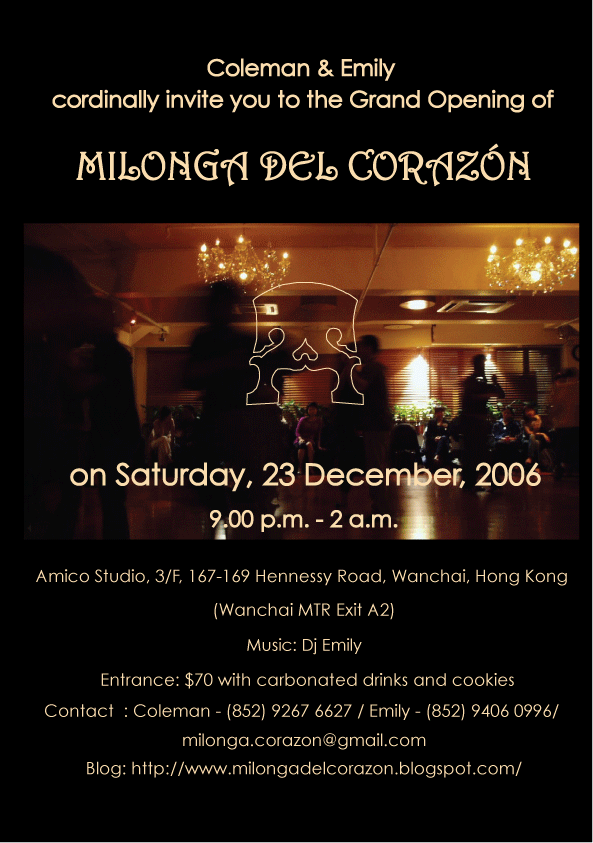
Please click the invitation card to see the details.
Wednesday, December 06, 2006
Enjoy Yourself Tonight Milonga - 2 December 2006
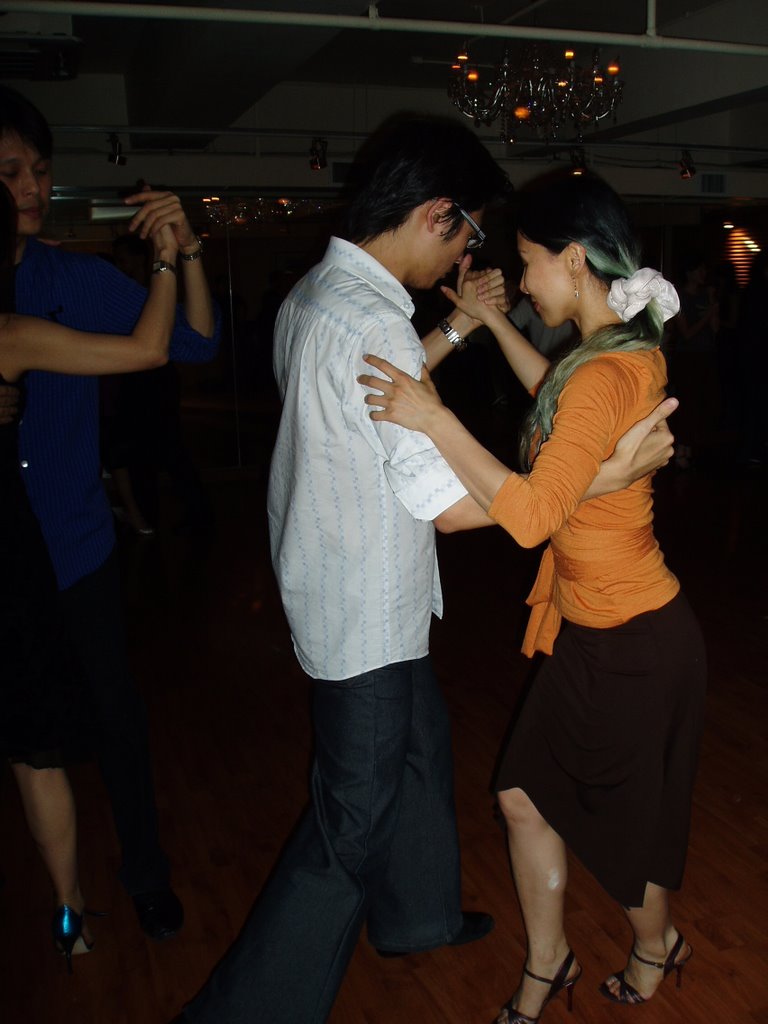
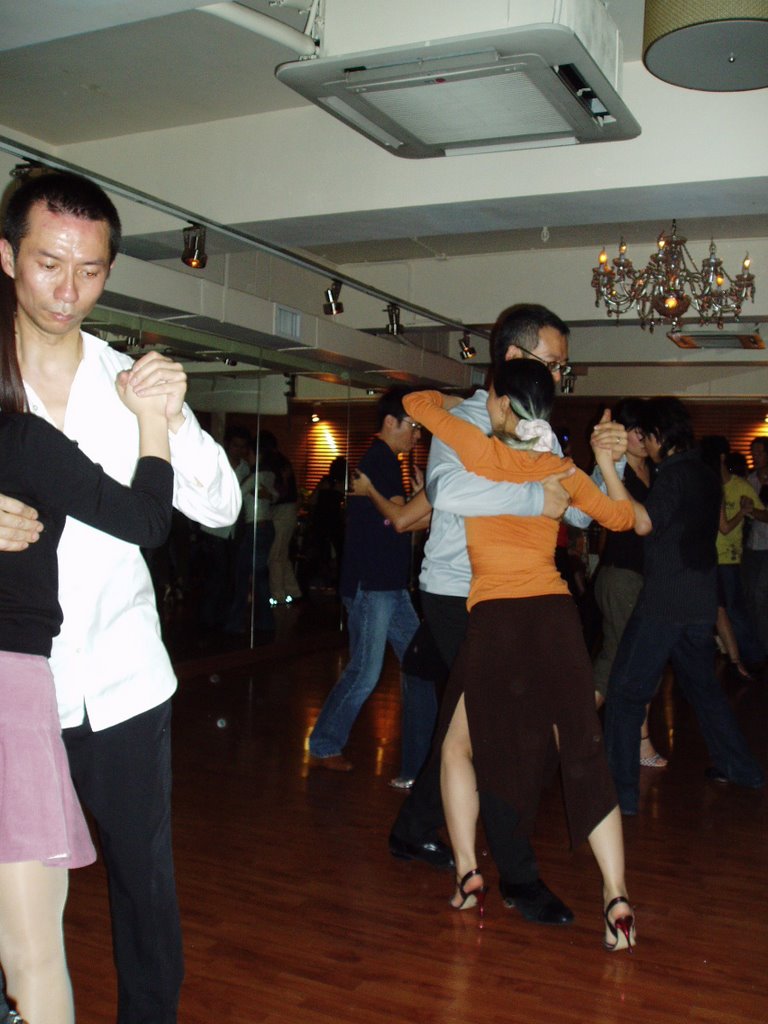
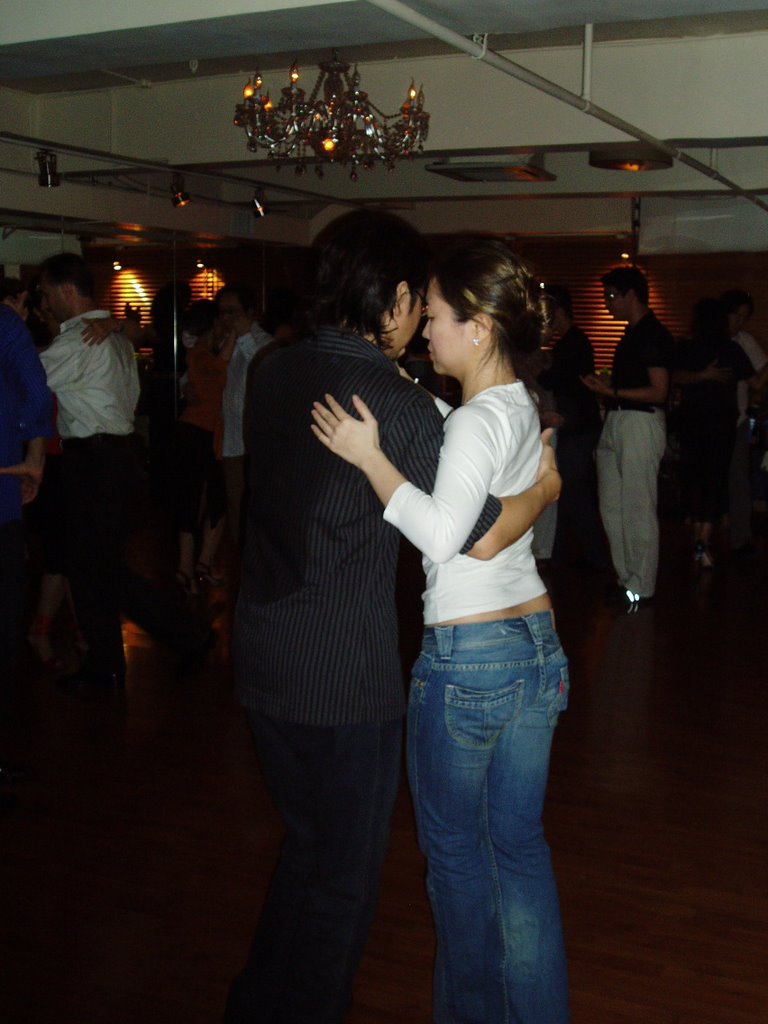
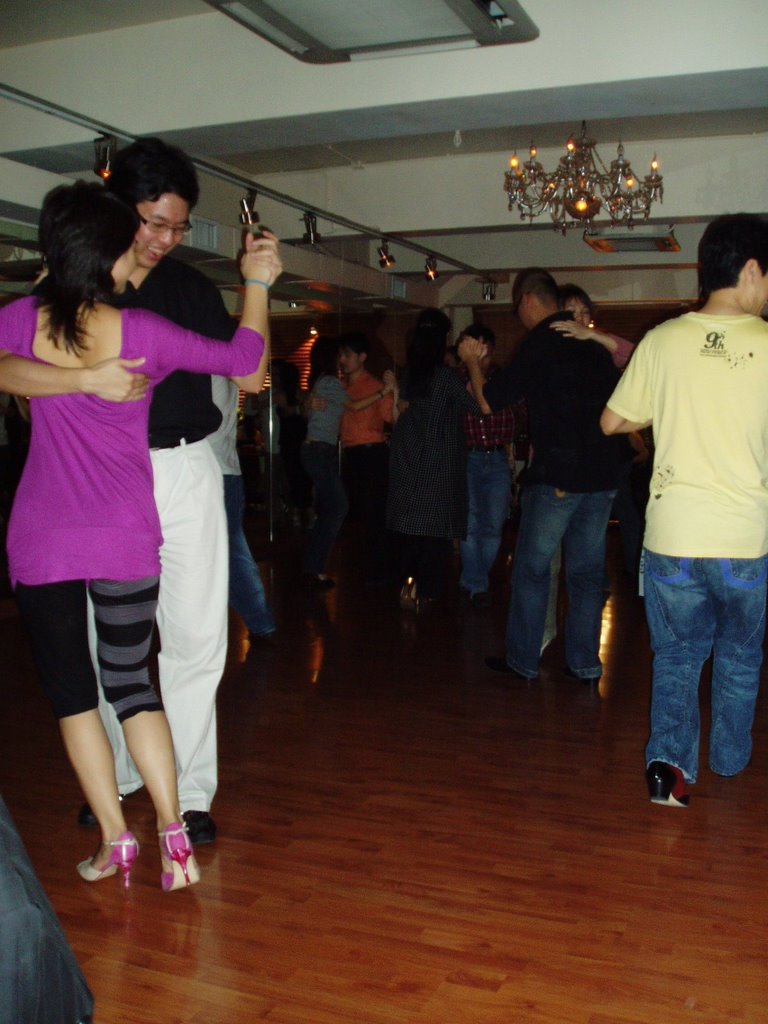
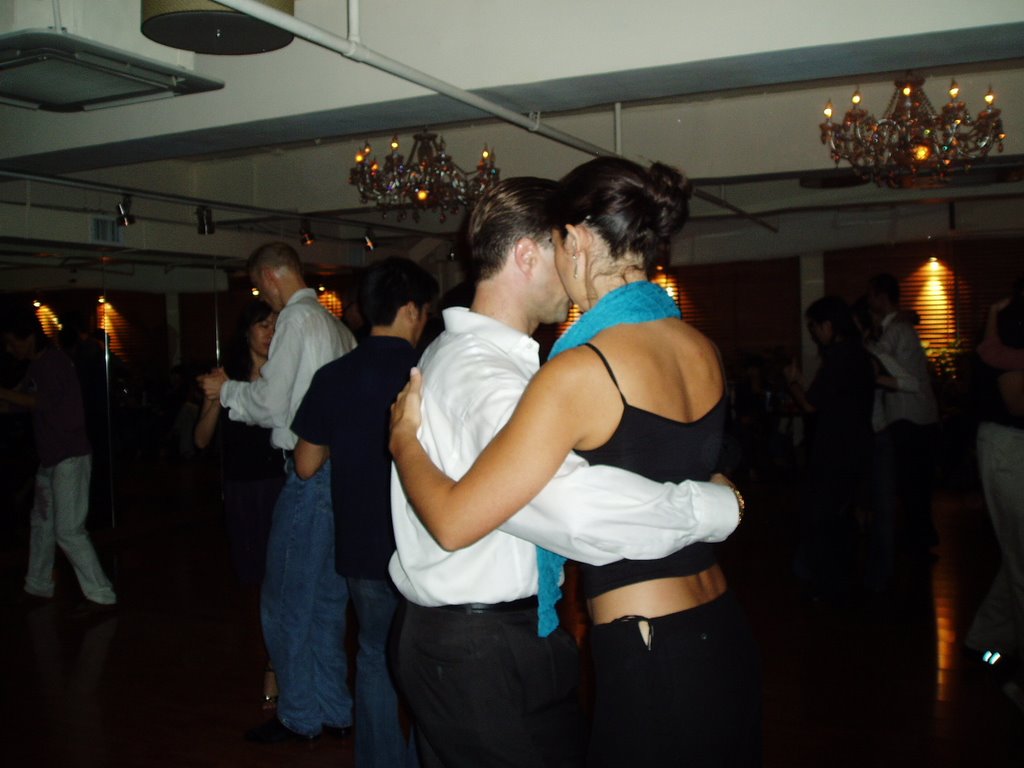
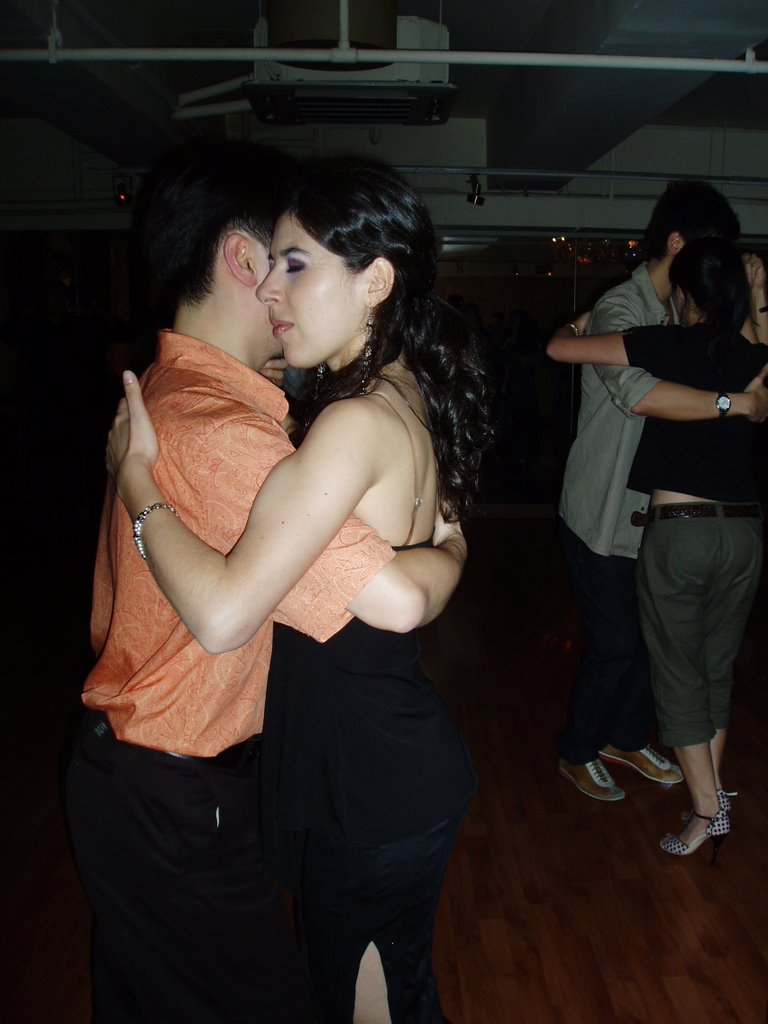
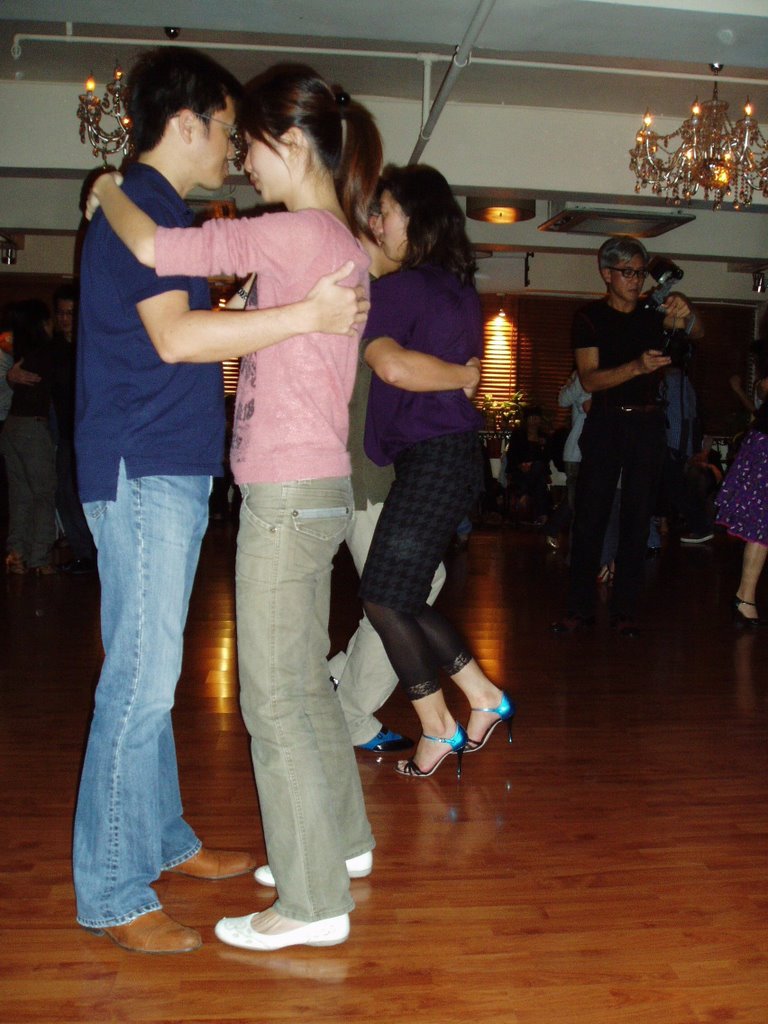


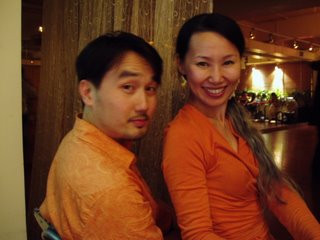
First of all I would like to say thank you for those who went to EYT Milonga, and also our special guests Hung Yut and Hwayi, Pablo and Noelia. Without you all, we cannot have such an unforgetable night. Actually, EYT Milonga is like the mother of Milonga del Corazon. When Coleman and I knew about Hung Yut and Hwayi's plan coming to Hong Kong and there was not any tango events during their stay, we suddenly came up an idea - why don't we organize a milonga for them? Then during the time when we were preparing EYT milonga, we both share similar thoughts about milongas in Hong Kong, the importance of music, etc...then we started to have an idea of a continuation- a regular milonga in Hong Kong on the saturaday evening. Again, thank you for all your supports. Please leave your comments about our milonga and we will try our best to offer you all a better place of dancing tango in Hong Kong.
Emily
Subscribe to:
Posts (Atom)
